


I'm not a terrorist, I'm feral class
An invitation to some kind of collective unsafe space for the disobedient and unhappy: a foreward to a new book by Marc Garrett

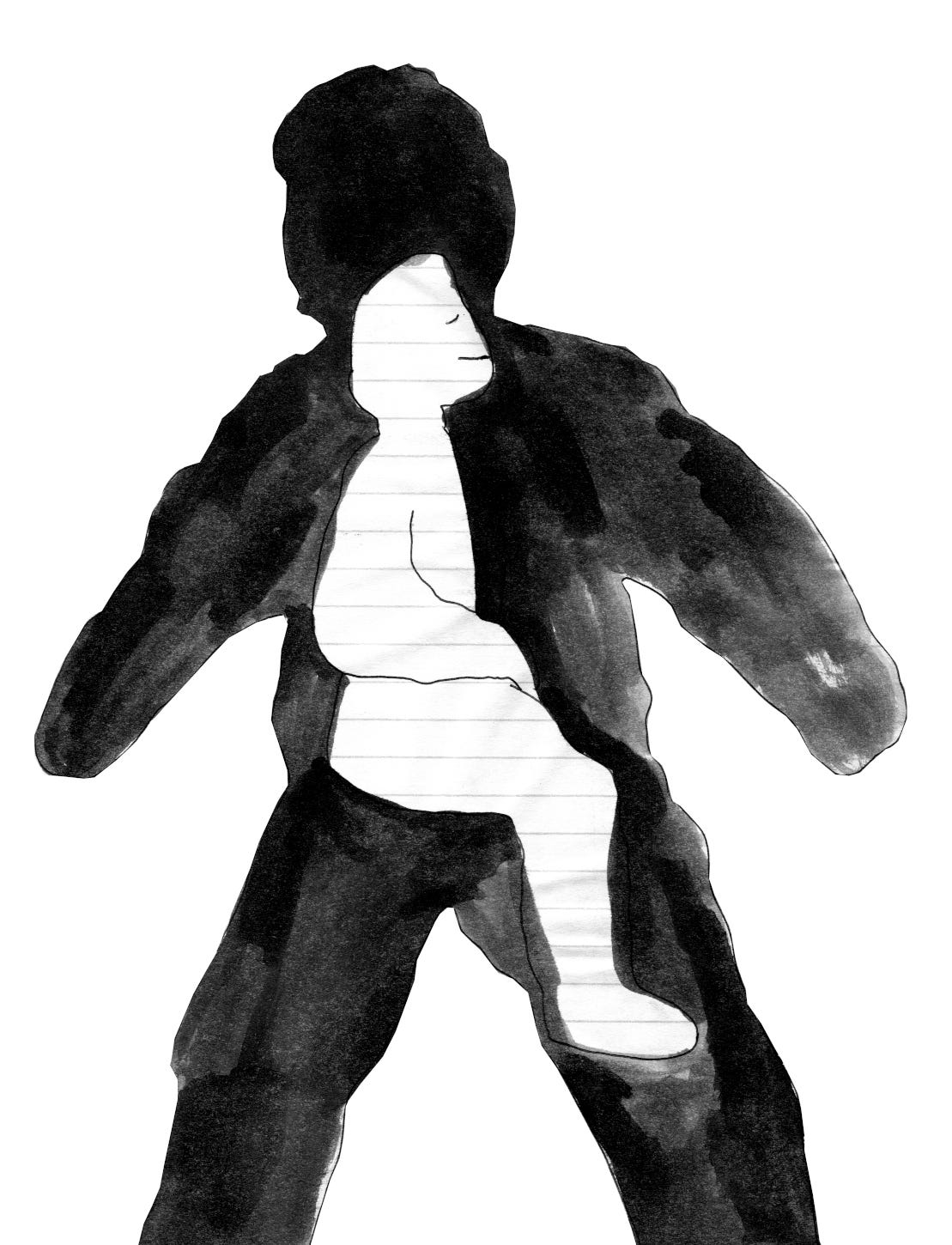
People Inhabit Other People. From Marc Garrett's Sketchbook, 1996.
Below you will find a foreward to a book by a dear friend, Marc Garrett. I wrote this foreward in November of 2024, and it only took me about a year (!). Feral Class, the book, is available to order now. Find it here: https://www.minorcompositions.info/?p=1561
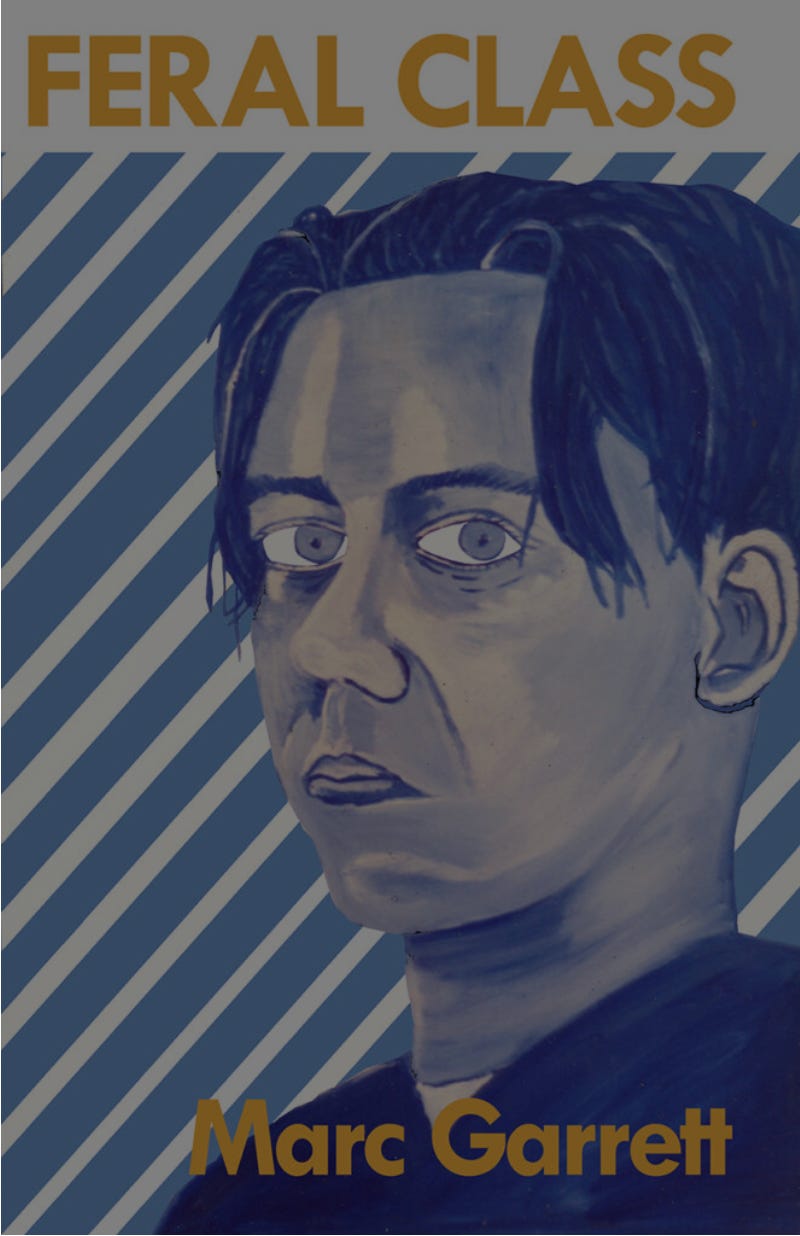
The book that my foreword introduces is a kind of anarcho-spiritual guide for those of us who are bursting at the seams, stuck in a flat white reality that is mostly continuing on as normal despite the extraordinary suffering of most beings on the planet. Feral Class, (the spiritual guide) doesn't include herbal remedies, consent protocols or rituals in the forest– instead it models stories about a person (Marc Garrett) who does not have the so-called skills to remain calm and pleasant when social reality is in fact an unfair, unjust piece of shit. If an honest response to genocide, environmental collapse, racist capitalist ideologies, and far right extremism feels impossible, rude, but completely necessary, then the Feral Class (the book, the untraceable group of people who cannot pretend to be happy, and the idea) may be your social medicine.
Forward
Every day, people are brilliant, and I don't need a PhD for that. The PhD was something I needed to prove to myself, and it contributed to me getting cancer; [it was] a passport to be feral in places that would normally not listen to you.
-Phone with Marc on August 2, 2024
Feral Class is written by and about a member of an unidentifiable group of people who are simply too upset to assimilate and smile while standing on a planet we've turned into a predatory war economy. The unruly combination of factors that allow you to hold this book today demonstrates the work of Marc and the feral class. To be specific, this book's existence is a beautiful contradiction: an untamed, nonlinear, and emotional allegory of a person who took close notes on his own spiritual and embodied disobedience in the face of all forms of authority and privilege, especially concerning the violence of institutions, is published and distributed by a renowned academic press. It can appear as if the academy and its sister institutions, prisons and pensions, professionalise and discipline all that is untameable and wild. What if a disorganised class of people were here to ruin that story?
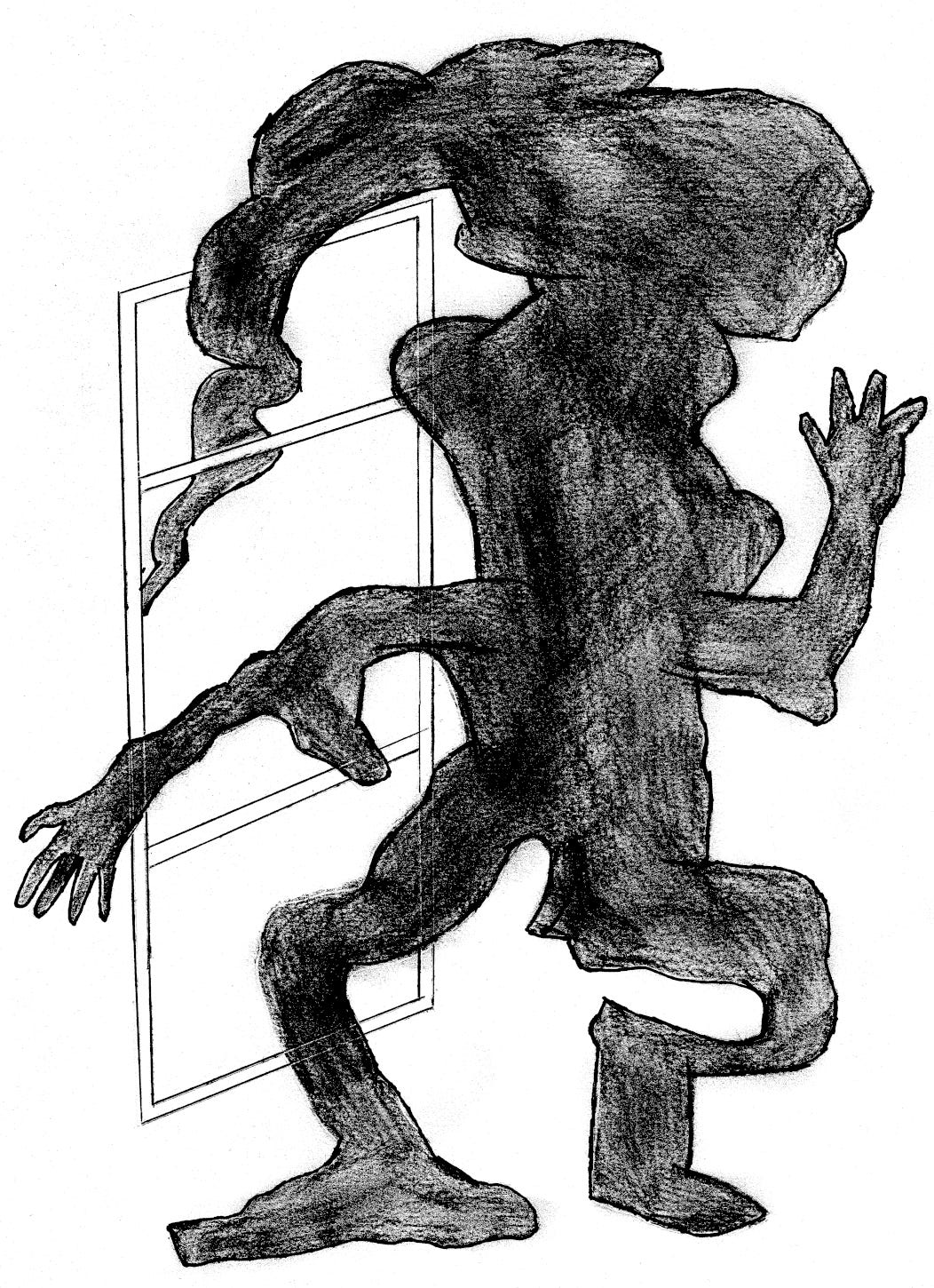
The Genie. Drawing by Marc Garrett on A4. 2024.
Marc is one of the first people I ever met who could use an invitation to an esteemed institution built on a legacy of wealth, power and exploitation to make a sincere offering that says and means, eat the rich, you cunts, very politely and with elegance. The feral class is an unsynchronised group of people who are not afraid to point out that the water is contaminated if it is obvious that someone has pissed in it. This unlinked network of dissidents cannot participate in a reality built on violent contradictions without pointing them out or disrupting them, though they (or, shall I say, we) are not necessarily strategic. In a way, to be strategic would be to play into the rules of the economy, rules that say everything has to be rational, and rationality has to do with a profitable bottom line, which makes no sense when we are on a burning planet. Being strategic might mean that we have a choice.
As Marc will explain, the feral class is not the working class, and membership in this class has nothing to do with one's ability to work to make money or to make sense. As he describes, the feral class might capture the people dumped by the working class because we are too weird or disobedient. However, the feral class does do very important (unwaged) work– we use our emotional and bodily reactions to the discomfort of normativity to disturb, dismantle, or destroy structures that force us all to be workers (workers who smile through the pain we endure when we ignore the exploitation and colonial wars our capitalist lives are built on top of). Our work in the feral class is to make a mess that exposes our individual and collective discomfort, even if that makes us slightly unemployable. But our work is not something assigned to us that we choose or that we can quit.
As the world gets hotter and the air conditioning bill goes up, many people with managerial class salaries or investments keep drinking better coffee, doing more rigorous exercise and using faster computers. Meanwhile, those same people report anxiety, depression, and brain fog. Some of the benefits of the job are no longer satisfying. What if more and more of these contracted but never fully employed humans, often locked into academic jobs that afford these unsatisfying and incomplete distractions from global suffering, working for controlling but decently paying repressive institutions, may unconsciously desire an escape that they cannot imagine alone? What if the possibility of making a mess becomes more needed and valuable than ever? This is where people like me and Marc have and do come in– to moderate a panel, write an article, produce an exhibition or be an artist in residence. As uncategorisable people who can speak wisely without faith in the dying value system of the academic or other institution, we have both been professionally involved with exposing the contradictions that everyday people are contracted to work within and smile about. We do neither reform nor revolution; it is a kamikaze mission to break what needs to be broken. This is how I pay rent.
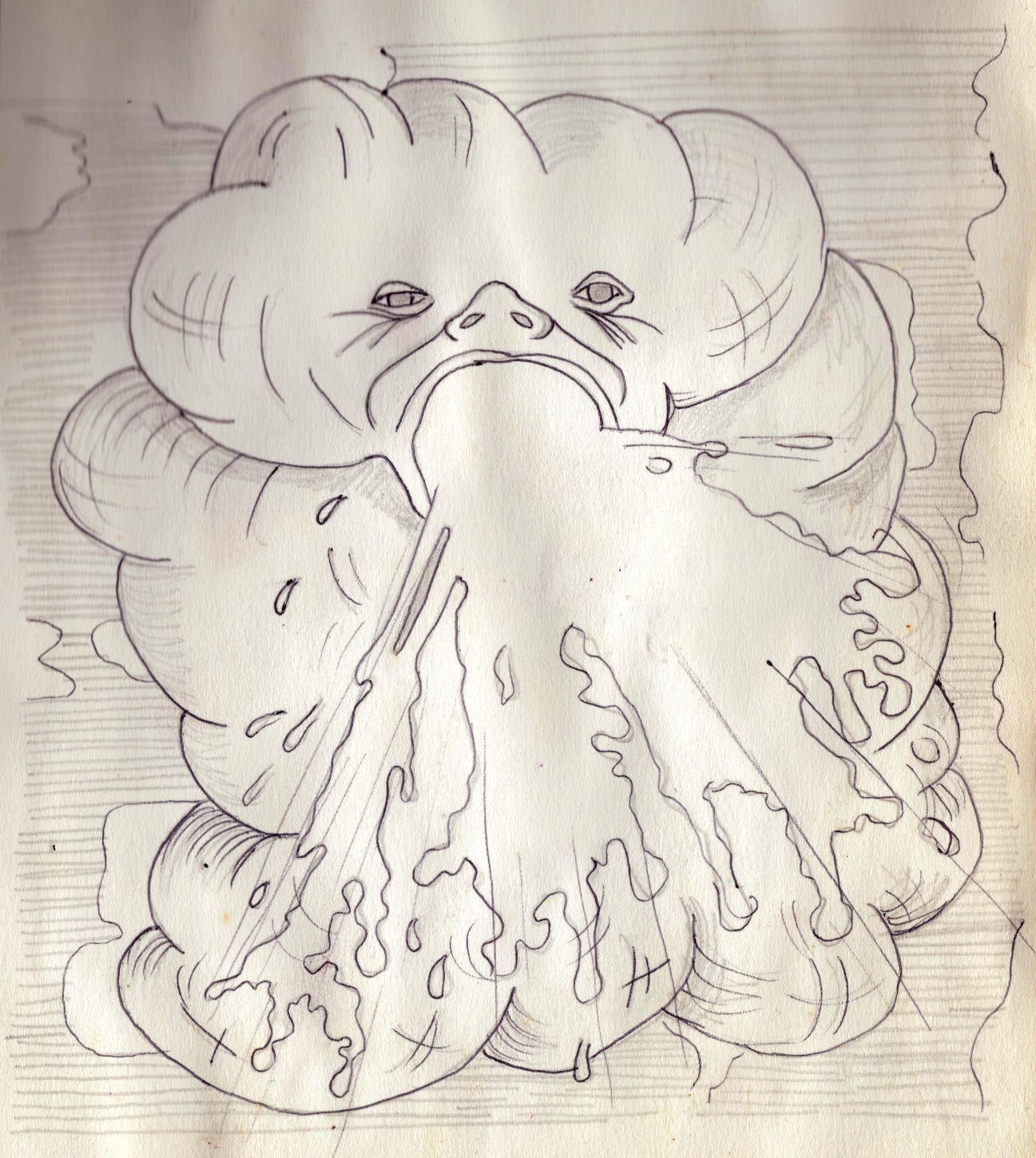
Cloud Coughing. Drawing in Sketchbook. Page size A5. 1986. Marc Garrett.
When Marc was a young and upcoming artist, his body repeatedly gave him no choice but to be an anti-capitalist artist. In more than one scenario, Marc got sick when witnessing unchecked class privilege as well as the absurdity of the art market. When he first went to NYC in 1991, a smug curator invited him to Christie's or Sotheby's auction house (it doesn't matter which one; they are all the same in this context). Seeing his art heroes' work was valued at thousands of pounds, he "turned green, ran out, and threw up on the steps outside the building, and couldn't go back in." He told me he felt too ill, ill in a way that continues to affect him when he witnesses the worst, most extractive and ironic parts of the way culture cuddles up to toxic industries through getting involved with stuff like crypto, AI and the elite art market.
Marc shares many stories in this collection that involve him as a younger person struggling to contain his disgust for unfairness. These stories become more weighty when we feel them within the context of Marc's professional life, including decades of vital contributions to cutting-edge critical working-class art and culture. I know Marc as a prominent and successful artist, co-founder and organiser of Furtherfield Gallery in London, a curator, writer, editor, DJ, academic and public speaker. His work as a critical utopian looks at technology, psychology, art, magic, film, pop culture and class. This list of identities or interests does not do him justice, though. When Marc appears in institutionalised academic or art spaces, things change because, as in all of the stories told in this book, he doesn't shut out his aversion to unfairness or his high expectations for what we can achieve if we work together. His presence is unprecedented within institutional spaces, including publishing; he does an essential service of speaking up with honesty against the tacit wishes of institutions. Marc's difficult work to stay present in places that challenge him and that he challenges gives gravity to the vulnerable and outrageous stories he shares here. Because these stories of feralness and Marc's disgust with normativity are the foundation of his professional life.
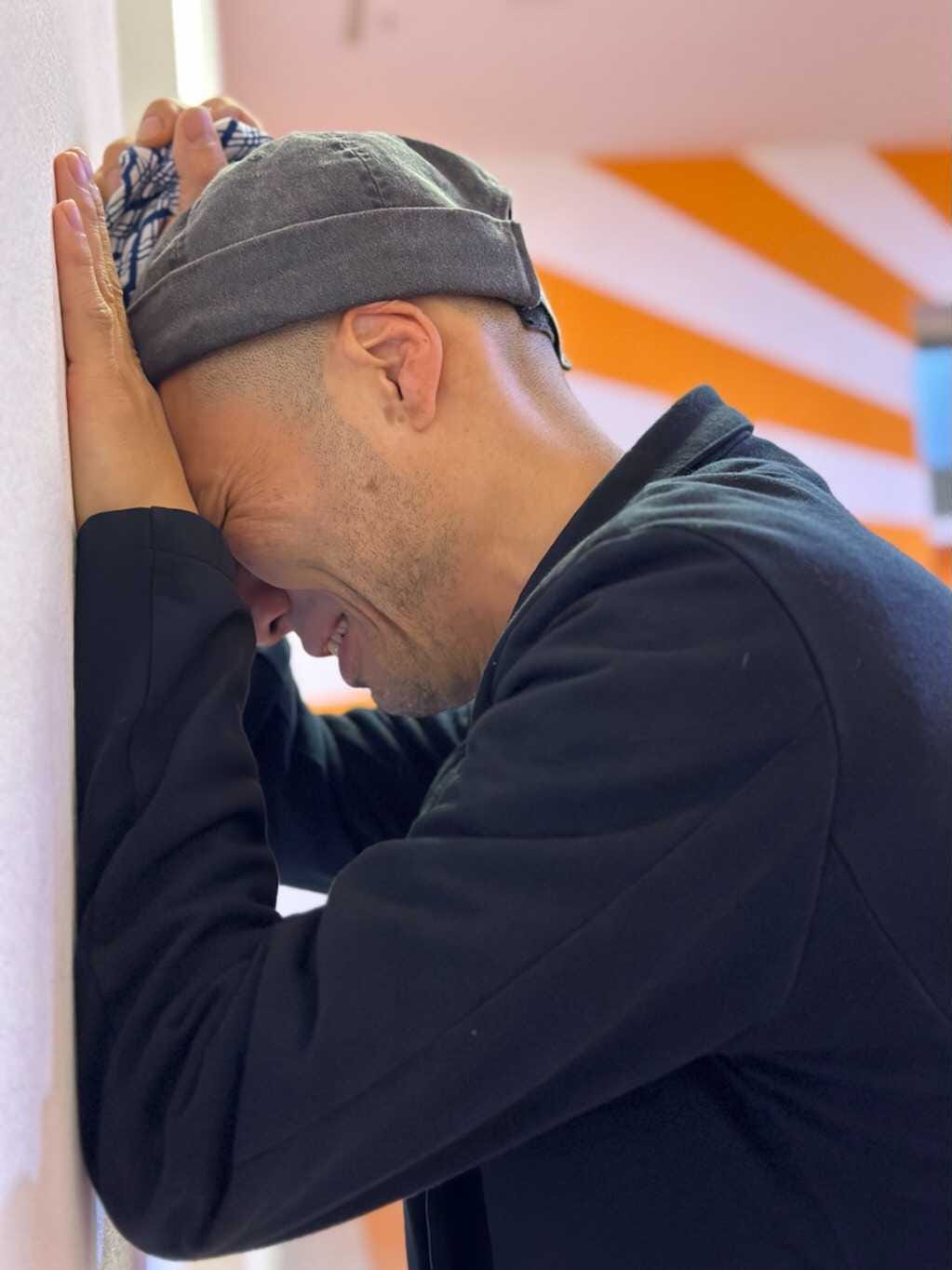
The Very Last Conference, performed by Michiyasu Furutani
The first time I heard Marc mention Feral Class, I was sitting on the floor drinking builders' tea at the coffee table inside his and Ruth's new living room in Felixstowe. We were getting ready to watch music videos curated by Marc. I had just come to visit after I had finished a new performance, where I hired an actor/butoh performer to attend a conference about the future of critique after the Internet at one of the wealthiest cultural institutions in Germany. Furu, a Japanese man, attended one day of the conference on my behalf.
At every session of the conference, he could be found crying, violently and sincerely, about the absurdity and disappointment of the costly and useless conference populated chiefly by white CIS men that were held during what already felt like an environmental and social apocalypse.
The Very Last Conference, performed by Michiyasu Furutani
The curator of the conference and the Kunsthalle had commissioned me to make this performance called THE VERY LAST CONFERENCE as if he was willing to help me destroy his work. Afterwards, the curator presented me with a news article from Die Zeit about the conference that described Furu's performance as a request for more kindness in critique. When I asked the curator why he thought the well-known art journalist so fully misunderstood the project, I stopped hearing from him.
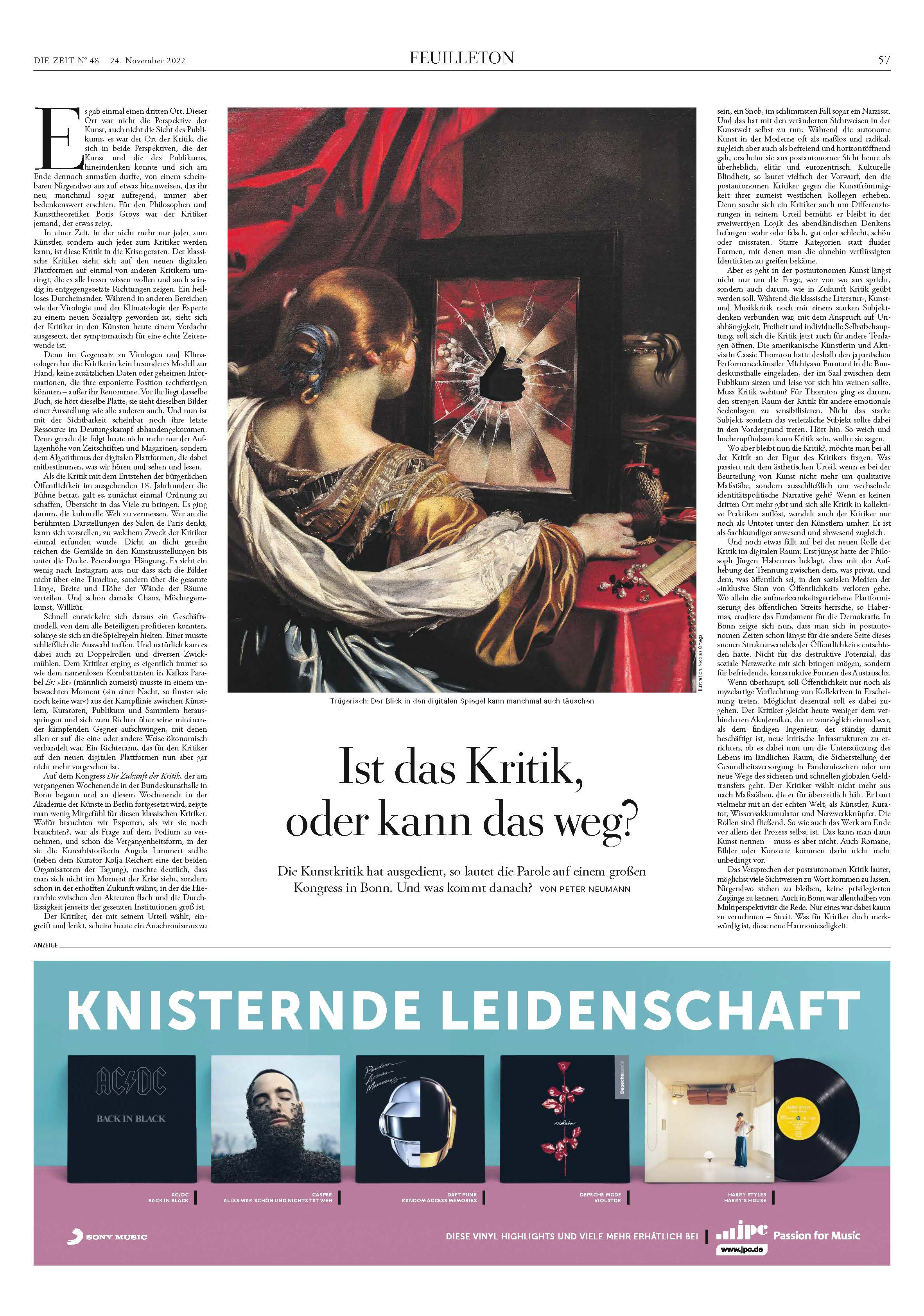
The completely out of touch description by the critic of Furu's performance:
Die amerikanische Künstlerin und Aktivistin Cassie Thornton hatte deshalb den japanischen Performancekünstler Michiyasu Furutani in die Bundeskunsthalleeingeladen, der im Saal zwischen dem Publikum sitzen und leise vor sich hin weinen sollte. Muss Kritik wehtun? Für Thornton ging es darum, den strengen Raum der Kritik für andere emotionale Seelenlagen zu sensibilisieren. Nicht das starke Subjekt, sondern das verletzliche Subjekt sollte dabei in den Vordergrund treten. Hört hin: So weich und hochempfindsam kann Kritik sein, wollte sie sagen. Wo aber bleibt nun die Kritik?, möchte man bei all der Kritik an der Figur des Kritikers fragen.
G-translate: The American artist and activist Cassie Thornton therefore invited the Japanese performance artist Michiyasu Furutani to the Bundeskunsthalle, where he was to sit among the audience and quietly weep. Does criticism have to hurt? For Thornton, it was about sensitizing the strict space of criticism to other emotional states of mind. The focus should be not on the strong subject, but on the vulnerable subject. Listen: criticism can be so soft and highly sensitive, she wanted to say. But where does criticism now lie? Given all the criticism directed at the figure of the critic, one might ask.


This work followed a long series of work I have been doing since 2011, in a similar spirit to puking outside the art auction house, which I call public breakdowns. In this work, I hire actors to respond to something specific within an institution or event that seems customary because we are used to unseeing it, which is absurd or violent. The performers trained with me to throw tantrums or to cry, to make a space where time stopped, articulating a difficult feeling that would otherwise not be allowed into institutional space. This work began in 2011 when I hired an actor to play an art student for over a year at my costly private US art school, where she revealed the hysteria she felt about the hundreds of thousands of dollars of debt she was incurring for a future of work that promised nothing. I have trained young men in the Czech Republic to have breakdowns about their relationship to gender and ableism within banks, bookstores, and universities. I have produced moments within massive business school lecture halls at Ivy League Universities where actors playing students become unhinged as they question some of the basic assumptions of macroeconomics, including scarcity, competition, and that we are economic men.
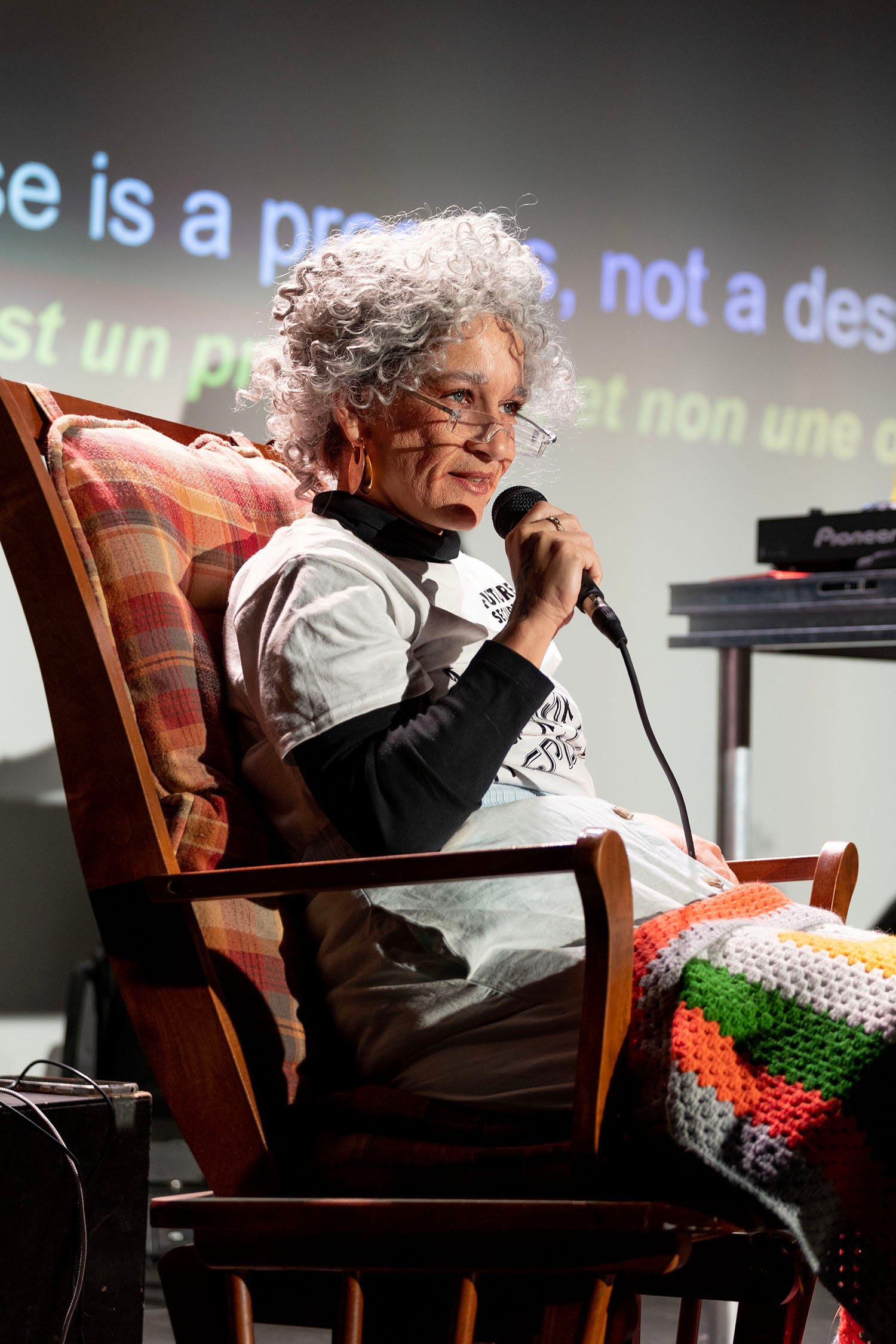
Here I am a Working Class Security Guard visiting Mutek Festival from 2038, as part of my ongoing project, The Festival of Zero Compromise
Most recently, I brought a feral class elderly person from the future to speak frankly at a tech conference, removing all the hype and sexiness from the space. Grandma couldn't stand the contradiction of drinking coffee, worshipping expensive digital art and discussing how the world is burning. In every one of these cases, I was brought in by a curator or administrator who knew what I was doing. In most cases, they were also disappointed. I made a mess, and it wasn't pretty.
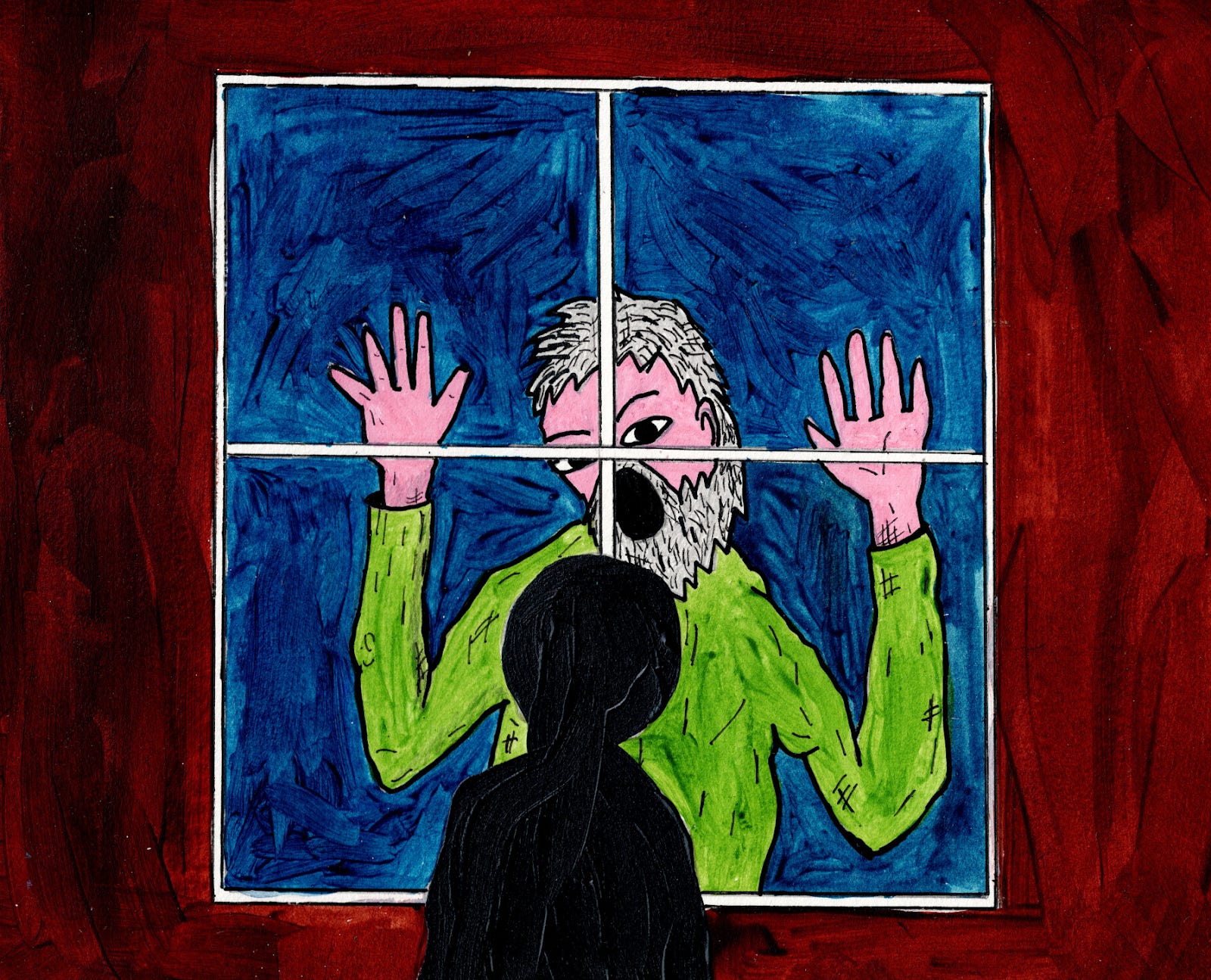
The Screamer, Marc Garrett, 2024.
After each of these projects, I usually have a (little) breakdown. It takes a lot out of me. It is difficult and tiring to enter the harshness of capitalist reality (or, here, the institution) and be disappointed, unconsciously seek transformation, and not know how to do it. It doesn't feel like a plan or a choice. It is a weird compulsion, and it can lead to many different behaviours. Maybe the weirdest one is to go closer into the spaces that make us feel so bad, the way I and Marc have. When speaking to Marc in the past months since his recovery from cancer, I see him entering institutional spaces less and less. I see him doing a lot of slow and gradual work to undo some of the habits that got him sick in the first case. He is making decisions about where to put his energy and when. I don't think that was always true for him based on the opening quote, where Marc describes how his PhD was something he needed to prove to himself, and as a passport to go be feral where he wasn't otherwise allowed and how the PhD contributed to his cancer.
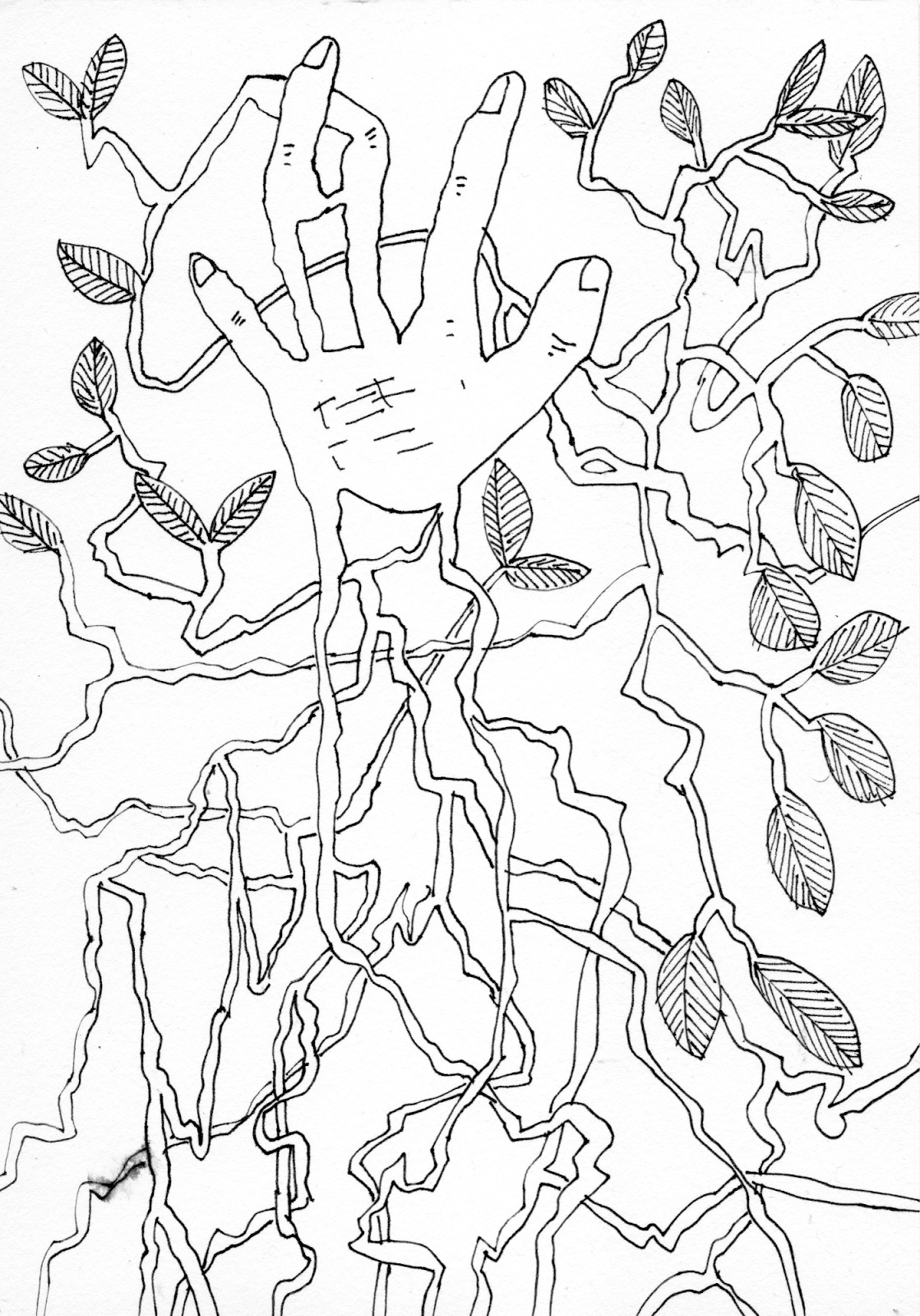
Fading away: From Sketchbook. Drawn from Marc's hospital bed during cancer. 2022.
What if the feral class shows us that our bodies are connected to a planet set ablaze by careless and violent human behaviour? To constantly feel like puking is not abnormal, given the circumstances, but most of us have had to shut that out. But if we stop collaborating with the body's signals and needs, we get evermore sick. I relate to this. I learned from writing this essay that we all may be feral class, but we may not know how to let ourselves know it or be it. This book is a passport that doesn't make you sick to be a member of an unrecognisable, disorganised class here to ruin some of our most boring stories.
Cassie Thornton, FERAL CLASS
Berlin, November 2024